The Inburgering Process in the Netherlands: A Guide for Spanish Speakers from Day 1 to the Exams
Written by: Fit4taal Team
Published: 20/12/2025
The inburgering, or civic integration, process is a legal requirement in the Netherlands for many non-EU immigrants. It is designed to help newcomers integrate into Dutch society and culminates in a series of exams that assess Dutch language proficiency, understanding of Dutch society, and knowledge of the Dutch labour market. For Spanish speakers from non-EU countries, this journey can be especially challenging. What follows is an overview from day one through to passing the exams, including the reasons why this path can be particularly difficult for citizens from outside the EU.
Day 1: Arrival in the Netherlands and Understanding the Inburgering Requirements
Upon arrival in the Netherlands, non-EU immigrants must register with the municipality (gemeente) where they plan to live. Shortly afterwards, they receive a letter from the Dutch immigration authorities (IND) informing them of their obligation to complete inburgering. This letter includes a deadline to finish the exams, usually within a three-year period.
For many, this first encounter with Dutch bureaucracy feels overwhelming because the integration process can appear complex and highly structured. The language barrier is immediately evident as all official letters are in Dutch, making it necessary to seek translation support.
Starting the Process: Learning Dutch (Nederlands)
Learning Dutch is the foundation of the inburgering process. The first step is to enrol in a Dutch course, which is often partially subsidised by the Dutch government through the DUO (Dienst Uitvoering Onderwijs) loan system. Even if Spanish speakers are familiar with other European languages such as English or French, Dutch can be considerably different in pronunciation, grammar, and sentence structure. Key challenges include:
Pronunciation: Dutch includes sounds that do not exist in Spanish, such as the guttural “g,” which can be difficult for Spanish speakers.
Grammar: Dutch grammar includes articles and verb structures that may feel unnatural, such as placing the verb at the end of the sentence.
Vocabulary: although there are similarities with English, most Dutch vocabulary is unfamiliar to Spanish speakers.
Courses vary in intensity, ranging from part-time evening classes to full-immersion programmes, and most language schools tailor their methods to each student’s level. The goal is to reach A2 or B1 Dutch, depending on the inburgering requirements, but achieving these levels can take several months or even years of study and practice.
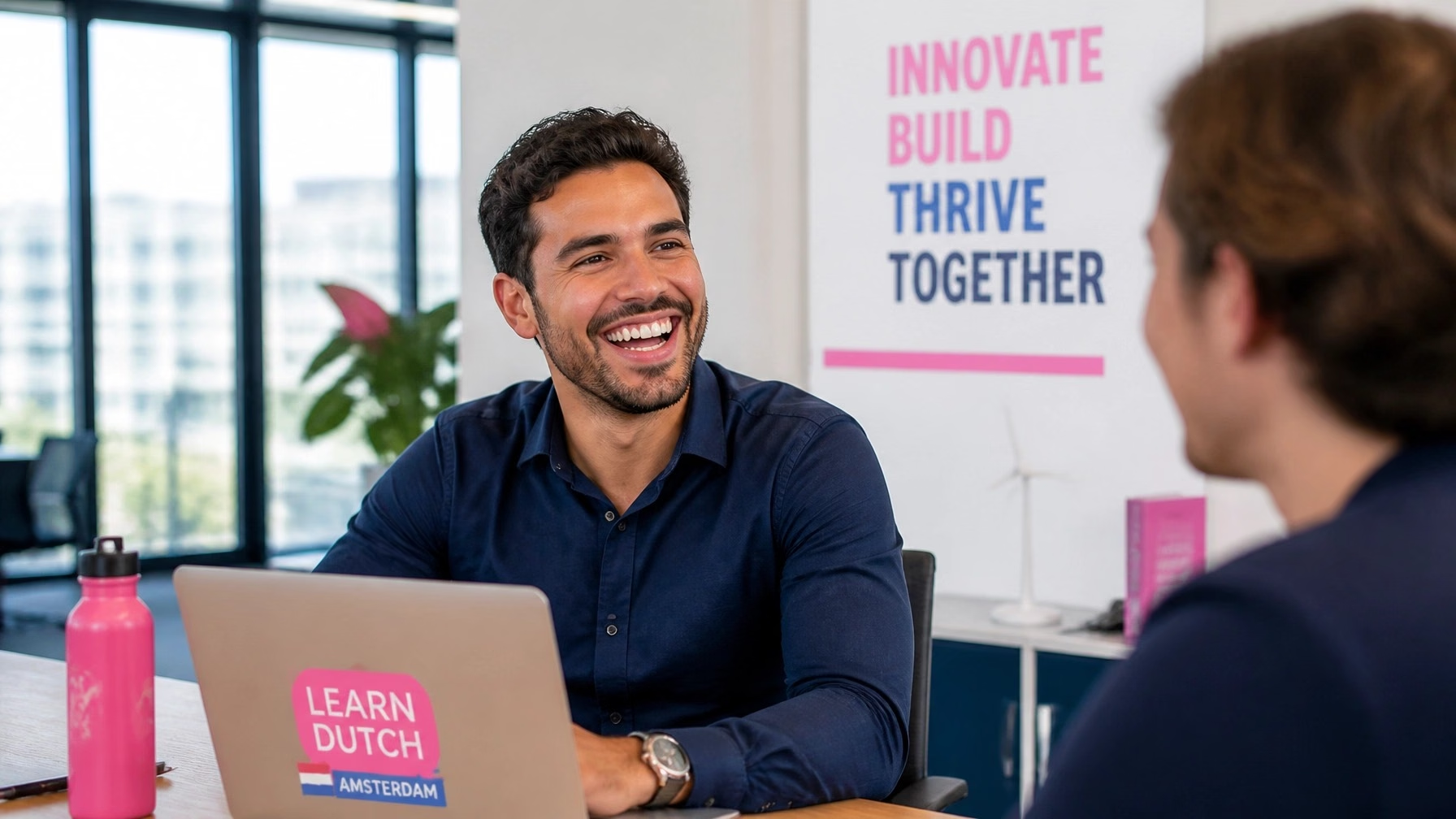
Man working on his laptop.
Understanding Dutch Society and Culture: Kennis van de Nederlandse Maatschappij (KNM)
Beyond the language, the inburgering process requires immigrants to learn about Dutch society through the KNM (Knowledge of Dutch Society) exam. This portion covers Dutch laws, social norms, the healthcare system, and the structure of government. For Spanish speakers, this area can be particularly challenging because of differences between Dutch culture and the cultures of Spanish-speaking countries, especially in aspects such as:
Work culture: punctuality, direct communication, and a clear separation between work and personal life are highly valued in the Netherlands.
Healthcare system: Dutch healthcare operates differently from many Spanish-speaking countries, focusing on preventive care and limited use of medication for minor illnesses.
Social structure: the Netherlands is a highly egalitarian society with a strong social safety net, and understanding the norms around gender equality, individual freedom, and personal responsibility is essential.
Many language schools offer specific KNM classes where instructors explain Dutch social and cultural concepts in ways that prepare students for the exam.
Getting to Know the Labour Market: Oriëntatie op de Nederlandse Arbeidsmarkt (ONA)
If you plan to work in the Netherlands, the ONA (Orientation on the Dutch Labour Market) module is essential. This part of the inburgering programme helps immigrants understand the Dutch job market, the application process, and workplace expectations. Spanish speakers may encounter challenges such as:
Building professional networks: the Dutch often rely on personal networks for job opportunities. Starting from scratch in a foreign country can feel intimidating, especially without strong Dutch language skills.
Cultural differences in job applications: Dutch CVs tend to be concise and cover letters direct. Interviews also focus heavily on skills and work experience.
Work restrictions for non-EU citizens: many non-EU immigrants must overcome restrictions or wait for residence permits that allow them to work, making it harder to job hunt and attend interviews confidently.
The ONA course includes tasks such as researching job openings, creating a CV, and developing a portfolio that showcases relevant skills and experience.
Group of students in a classroom.
Preparing for the Inburgering Exams: Final Steps
Once you feel ready, the next step is to register for the inburgering exams. There are typically five components:
Reading (Lezen) in Dutch.
Writing (Schrijven) in Dutch.
Speaking (Spreken) in Dutch.
Listening (Luisteren) in Dutch.
Knowledge of Dutch Society (KNM).
If your goal is to work, completing the ONA assignments is essential. These exams are usually taken at approved testing centres, and it is advisable to practise with sample exams to become familiar with the format and question types.
Why Is It More Challenging for Non-EU Citizens?
The inburgering process is demanding for everyone, but non-EU citizens face additional obstacles:
Lack of prior exposure to Dutch: unlike many EU citizens, those from outside the EU may have had no contact with the language before moving to the Netherlands.
Limited social networks: building connections in the Netherlands takes time, especially without Dutch fluency. The absence of local relatives or friends limits opportunities to practise the language and culture.
Financial constraints: although the DUO loan helps cover some costs, non-EU citizens often face higher financial burdens due to relocation, visa fees, and living expenses, making the additional cost of courses and materials a hurdle.
Pressure from legal requirements: integration is often mandatory for residence, and failing to meet the requirements on time can have legal consequences, including the risk of losing a residence permit.
Achieving Success: Passing the Exams and Integrating into Dutch Society
Passing the inburgering exams is a significant achievement. It not only fulfils a legal obligation but also symbolises the determination to integrate and contribute to Dutch society. For Spanish speakers and other non-EU immigrants, success is often accompanied by a deep sense of pride and belonging.
The inburgering process is undoubtedly challenging, especially for those coming from outside the EU. However, with perseverance, resources, and support, success in the Netherlands is attainable, opening up a world of personal and professional opportunities.
By approaching each stage with patience and commitment, Spanish-speaking immigrants can not only meet the requirements but also fully integrate into Dutch society, bridging cultural gaps and enriching their lives in the Netherlands.
Book a free 30-minute trial class and get personalised guidance from your very first contact. Discover your level and the best route to reach your goals in the Netherlands.